
Ingredients
- 1 cup amaranth
- 2-1/2 cups water
Instructions
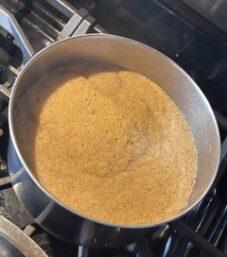
Bring amaranth and water to a boil, cover and simmer 20 minutes or until water is absorbed.
Why Amaranth?
Amaranth is technically a seed not a grain. Amaranth seeds contain 13–15% protein per serving, with all nine essential amino acids including lysine, which is frequently absent from other grains. Studies show that in the plant kingdom, amaranth proteins are among the most similar to animal proteins.
On fiber, amaranth delivers roughly 6–7 grams of fiber per 100 grams, considerably more than any rice variety. And amaranth delivers 7.6mg iron (42% daily value), 248mg magnesium (62% daily value), and 557mg phosphorus (79% daily value) per 100g, outperforming wheat and rice in most micronutrients.
For gut health specifically, amaranth’s soluble fiber dissolves into a gel-like mass that traps fats, sugars, bacteria and toxins, and may help prevent leaky gut syndrome.
Amaranth sits above rice on almost every nutritional measure — more protein, more fiber, lower or comparable glycemic index, unique antioxidants, and complete amino acid profiles. The cook-cool-reheat resistant starch trick also applies to amaranth, so you can stack that benefit on top of everything else.
Amaranth does not have a lot of flavor, so mixing it with pesto or other flavors you enjoy make it easy to add to your meals. When cooked it also has a pretty glistening that makes it appealing. Many use amaranth as a morning porridge, I like to use it as a rice substitute.