Sleep — Its a big topic, especially when its elusive
Sleep is getting a lot of attention in health and wellness circles. As it should. Sleep may be the only real “magic bullet” against most every disease. If the body does not sleep well, healing is challenged along with daily repair and renewal.
Most of the talk around sleep these days is related to cognition and brain health as one ages. And yes good sleep is protective against age related mental decline —and so are many other activities such as exercise or movement of any type, diet, social engagement, pranayama, meditation and all the practices of yoga —and most importantly your beliefs around aging. So know you have tools to protect your brain health as you figure out your sleep.
Downside —when you make sleep a big deal it can disrupt it even more. You end up adding anxiety around your lack of sleeping which creates a vicious cycle interrupting sleep even more.
Wearables that track sleep add to this anxiety. There are a lot of tools available to track your sleep. I mostly don’t like them. They tend to make you over-worry about the type of sleep you are getting and many people become obsessed with their sleep numbers leading to more stress which = disrupted sleep. However they can be helpful to use as an occasional assessment of your sleep. The aura ring is the one many of my clients like the best. I would caution against using it every night. A better option would be to look at your sleep patters every three months or so and see if you there are some lifestyle factors you can adjust to improve your sleep markers.
My other concern with wearables is wearing electronics at night —especially electronics that are emitting data to your smartphone while you sleep. There are some concerns over EMFs and while I am not sure if they are valid, they might be. Best to limit that exposure until more data becomes available oneway or the other.
Sleep — Lifestyle factors to support sleep. Some may be the low hanging fruit and easy to adopt.
- Daytime light increases your body’s production of melatonin. Melatonin is not just a nighttime hormone —in fact 90% of our melatonin we make in the daytime through exposure to sunlight. This melatonin is called subcelluar melatonin and it is produced in our cells. Nighttime melatonin is released from our pineal gland and encourages sleep. Daytime melatonin is triggered by sun and is a major antioxidant in our body. While it is not directly related to sleep like pineal melatonin it will support better sleep through reducing inflammation and improving cellular health. More on melatonin to come.
- Get outside upon waking – The main job of the eyes is to collect light information about where the sun is in the sky and send it to the brain. From there the brain can tell the cells what time of day or night it is and what they should be doing. Every cell in the body needs to know if it is day or night.
The light information sent to your cells regulates when you’ll get sleepy, when you’ll feel awake, how fast your metabolism is, your blood sugar levels, your dopamine levels, and your hormones in general. - Be outside as much as you can. Just being outside most of the day improves sleep — take a walk in the woods. Have a beach day and see how you sleep that night —etc.
- Dim blue lights at night. Try to stay off screens a couple hours before bed. If you do get on screens use the nightshift setting or get an app such as the iris app that removes blue light from your screens.
I dim all lights at night — buy orange light bulbs (not LED) or salt lamps for low light at night. Or try these amber vintage incandescent light bulbs. - Figure out your circadian rhythm. Not everyone thrives on early to bed and early to rise. If you let your body go to sleep when it wants and wake up any time it wants what would your rhythm be? There is the issue of not getting enough sleep and, separately, the issue of sleeping outside of one’s biological clock rhythm. You could get 8 hours of sleep, however, if it is at a time that is not aligned with your circadian rhythm, it can be as bad as not getting enough sleep.
One the healthiest things you can do for yourself is to find a job that aligns with your circadian rhythm. Try not to ever have to wake up to an alarm ! - Exercise according to your circadian rhythm—when does exercise feel the easiest for you to do? That is your best time to exercise. Light early evening exercise (at least 3 hours before bed) —not too strenuous can aid one in falling asleep.
- Cool room, you will sleep better in a cooler room. Night sleep hours is good time to reduce your heat, and side benefit, sleeping in a room 65o or less could increase your brown fat while you sleep (brown fat is metabolically active and more of it is good).
- Establish a bedtime routine, including a warm shower or bath at night can be helpful. Maybe a little soothing gentle pranayama such as nadi shodhana (alternate nostril breathing) or resonance breathing before bed? Or a short chakra meditation. Find a sleep essential oil blend or single oil you like —lavender is a good go to and diffuse it or put a drop on your pillow each night. That can be a cue for your body that its time for sleep when it is done consistently —and can be especially helpful during times of travel when you are thrown out of your normal routine. The scent will remind your body it’s time for sleep.
- Try an evening tea routine of lemon balm, passion flower, or chamomile tea
- The Darkness Factor – make sure your room is completely dark —or cover your eyes. If there are any LED lights on any devices in your room such as an air purifier, cover them —or wear a mask to sleep.
- Make sure to set nasal breathing as you drift off for sleep. I am a side sleeper with a body pillow. I pull the body pillow up to my chin as I prepare to sleep using the pillow to keep my mouth closed so I don’t slip into mouth breathing while I sleep (which is common). Training your body to be a nasal breather all day long will help your body fall into the habit of nasal breathing at night. Mouth breathing at night can be disruptive to your sleep. If you wake up with a dry mouth that is a sign you are mouth breathing.
- No caffeine after 2pm
- Are you taking any medications that affect sleep?
- Set up your daily schedules to allow at least 8-9 hours of bed time.
- Try to go to bed and wake up around the same times each day.
- NO NEWS AT NIGHT. No paying bills before bed. No checking financial reports too close to bedtime. No work that is stimulating or stressful in the evening. Between 6 – 10PM, the nervous system and cortisol levels should be winding down. Avoid watching TV, exercise or being on your computer for at least one hour before bedtime, as it stimulates the nervous system and blocks melatonin production. Blue light filters help support melatonin production, but they do not stop the overstimulation of the mind.
- If you are upset about something, try to formulate some plan of action or resolution before trying to go to sleep. Then tell yourself “we will revisit this in the morning, we can let it go for tonight”. Envision filing it away for the night.
- No food 3 hours before bed. This is important so your body can detox overnight and not digest. The same organs both digest and detox, and we have a major detox every night when we sleep, if you are digesting when you go to bed you interfere with this important overnight “cleanse” and interrupt sleep. The only exception to this might be if your blood sugar drops overnight —which will kick on your cortisol and wake you up to find food. If you wake up in the middle of the night frequently it can’t hurt to monitor your blood sugar for a few nights to see if it is blood sugar related.
- If it is blood sugar, eat a protein- and fat-rich snack before bed to keep your blood sugar steady. Try something like Greek yogurt with berries or sourdough toast with nut butter. Also make sure your last meal of the day has adequate protein to sustain your blood sugar overnight.
- I know this goes against eating in alignment with our natural circadian rhythm —sleep is so important if you need food before bed to keep your blood sugar steady through the night and prevent nighttime wake-ups, you should 100 percent try to have a little something to eat before bed.
- Try sleeping separate. Each person needs their own room temperature, darkness level, blankets, quietness …. You just might sleep tight again.
- Try a Bedtime Mantra: “I can relax and fall asleep” or “My body knows how to get to sleep and stay asleep” “I am empowered with the tools and knowledge of how to relax and fall asleep”.
- At night after lights out or if you wake up in the middle of the night and can’t get back to sleep try a sweeping breath meditation or this progressive relaxation meditation
- If you are not falling asleep as quickly as you like try sighing audibly 5 or more times —this will stimulate your vagus nerve and help to calm your mind for sleep. Try to remember to close your mouth after your sighs to fall asleep with nasal breathing. Or get into rest pose position and do slow breathing. A trick that worked for me was to recite the Sanskrit names of all the poses in one of the ashtanga series. I never made it all the way through a series before falling asleep.
- Try palming for 5-10 minutes after you crawl into bed. This will relax the eyes. You may even start to fall asleep while palming. If so just roll over and go to sleep! Our eyes are active while we sleep and palming for a few minutes before sleep can help to improve your sleep quality. I place a pillow over my chest, rest my arms on it and palm til my hands start to slip off my face, then I roll on to my side and go to sleep.
What about naps? Naps can be helpful if they are not too long and not too late in the day. An ideal nap time would be about 20 minutes in the early afternoon (not after 3PM). Give yourself a period of time after waking up from a nap to come out of the sleep inertia. Naps can also be helpful because you are training your body to fall asleep — over time it may help your body fall asleep better at night.
Try side sleeping:
The glymphatic system is active while we sleep, it takes about 6-8 hours for the glymphatics to “do their job”. They are like hidden caves that open up at night while we sleep and drain our brain toxic wastes into our cerebral spinal fluid where they can be detoxified. In fact the most talked about brain toxin (neurotoxin), beta amyloid plaque is drained while we sleep through these glymphatics. We do most of our brain detoxing while we sleep, hence the importance of sleep on our cognitive function. The glympahtics clears about 3# of toxins each year from our brain.
Ayurvedic doctors recommend side sleeping to best drain the brain glymphatics, usually left side is recommended, though other experts suggest back sleeping (with a pillow under your knees) is better for deeper sleep and alignment of the body during sleep, and TCM recommends right side sleeping. Sleep is so important to health I would say whichever way you sleep tightest is the best way for you to sleep!
If you do like side sleeping, putting a pillow between your knees can be helpful to support your spine as you sleep. Also if side sleeping feels like it is too much on your shoulder you can sleep half way between your side and your back taking pressure off the shoulder. I like to sleep hugging full body pillow, it helps take the pressure off the shoulder.
7 Reasons to Sleep on Your Left Side according to Ayurveda
- Facilitates lymphatic drainage from your brain
- The heart to pump downhill while sleeping on your left side
- Better elimination in the morning as it supports the flow of digestion (the defending colon is on the left side of our body)
- Supports healthy spleen function
- Encourages proper digestion and detoxification
- Helps circulation back to the heart
- Helps bile flow more freely
ref. https://lifespa.com/lymphatic-system-ayurveda/
More from Ayurveda on sleep
Vata dosha is the elements of air and ether. While those with vata body types or vata imbalances may more prone to experience sleep issues when younger, with age vata increases in us. Each dosha is also connected to a phase of life; kapha in youth, pitta in householder phase, and vata after that. As we get into our vata time of life we need to be more vigilant with vata balancing protocols —warm, moist, grounding.
Vata winds make for overactive minds. If you consistently notice the mind is very active at bedtime, experiment with a vata-pacifying diet (warmer, moist, slightly heavier foods) and practice some of the oil massage practices below.
Sleep supportive foods are generally characterized by having one or several of the following qualities: warm, moist, oily, sweet, salty, and/or sour. Some examples include vegetable soup, steamed vegetables, nuts, seeds, and grains.
Foods that are cold, dry, uncooked, and spicy can contribute to insomnia. Decrease your consumption of cool salads, chips and salsa, crackers, cold beverages, caffeine, and spicy foods if sleep is problematic. If you really love dessert, have it after lunch rather than after dinner. This will allow your body to burn the sugar off during the afternoon, rather than letting it keep you up at night.
Before bed try gently massaging the top of your head and bottom of your feet with warm sesame oil or ghee. For moderate sleep concerns, a gentle, full-body self-massage (abhyanga style) followed by a warm bath with epsom salts can help you relax and sleep better. In post-menopausal women with sleep imbalances, an evening, full-body oil massage for many improves healthy sleep cycles.
https://pmc.ncbi.nlm.nih.gov/articles/PMC4521661/
Drink a glass of warm milk before bed. Warm milk has peptides and tryptophan that help lower cortisol and encourage melatonin production supporting healthy sleep. Add a little raw honey, and/or saffron, nutmeg, and poppy seeds —these will be calming additions
https://pubmed.ncbi.nlm.nih.gov/15517308/
Sleep apnea
Many people who are not your typical apnea patient (overweight snorers) have undiagnosed sleep apnea — a subset of sleep apnea — that greatly interferes with their sleep.
If you are a petite person with a narrow face, neck, and jawline most likely your airways are more narrow as well and can put you at a higher risk for breathing difficulties.
What happens is as you sleep your airways collapse making breathing difficult and it activates your sympathetic nervous system —meaning stress response while you sleep. If you grind your teeth frequently while you sleep this is a sign you are lacking oxygen. By pushing the jaw forward with the teeth grinding it opens the airways.
Ways to test for sleep apnea — they now have home monitors you can use, while better than sleeping in a strange hospital type of setting to be monitored they still are not very comfortable and interfere with sleep. If you wake up tired frequently even though you thought you had a good nights sleep —this is a sign you might have sleep apnea,
Before you go the direction of a CPAP, tongue posture while sleeping is critical! Tongue on the roof of the mouth as I teach in yoga, you want your tongue on the roof of your mouth whenever you are not talking or chewing. If you can train your body to fall asleep this way you will breathe better while sleeping and reduce the risk of sleep apnea occurring.
Other suggestions before you go to a CPAP: try those funny nose stretching tapes for sleep (like the athletes wear) called breathe right strips. And make a point to fall asleep with your tongue on the roof of your mouth!
Alternatively you could try mouth taping as well : https://www.normalbreathing.com/l-mouth-taping.php If this does not appeal to you, you could tape your mouth about an hour before bed to set the habit, then remove the tape before going to sleep.
If all else fails a CPAP may be the answer for you. I have several clients who love theirs.
Pranayamas that help your brain detoxify just like sleep these are tools you can use to keep your brain healthy even if sleep is fleeting.
The glymphatic system depends on rhythmic changes in blood vessel diameter to push fluid through the brain, while this happens during sleep there are other ways to make the vessels ebb and flow.
Science set out to test whether brief, controlled exposures to slightly elevated carbon dioxide levels could trigger these rhythmic blood vessel changes and enhance brain fluid flow.
The researchers studied both healthy older adults and people with Parkinson’s disease. Participants wore a mask that delivered small, carefully monitored increases in carbon dioxide for short periods, alternating on and off in cycles. Brain imaging showed that each carbon dioxide exposure caused blood vessels in the
brain to dilate and then return to baseline, creating a kind of pumping effect. This vascular rhythm was followed by increased cerebrospinal fluid inflow, suggesting activation of glymphatic movement.
Erhardt, E.B., Mayer, A.R., Lin, H.C. et al. The influence of intermittent hypercapnia on cerebrospinal fluid flow and clearance in Parkinson’s disease and healthy older adults. npj Parkinsons Dis. 11, 334 (2025). https://doi.org/10.1038/s41531-025-01179-6 https://www.nature.com/articles/s41531-025-01179-6
This is what happens when we hold our breath! Hypercapnia is the build up of carbon dioxide in our blood and it is the impetus that makes us want to breathe. When we practice breath holding we are trying to train our body to not let hypercapnia train us to breathe so quickly. We want carbon dioxide in our blood! CO2 is what pushes the oxygen from our blood to our tissues where the oxygen is needed.
Introduction to holding your breath
Other pranayamas that have a detoxifying effect on the brain include:
Kapalabhati aka skull shining
Brahmari aka humming bee breath
What about White Noise Machines?
If you are using a white noise machine to block out noises outside many times people turn up the volume too loud to block out other noises. There is limited data that shows support for white noise machines being helpful at improving sleep quality. Continuous noise tends to be more disruptive than supportive of sleep.
Maybe in a hospital setting they could be useful as long as the volume is kept low, 60 decibels or lower and place the machine at least 7 feet away from your bed.
Noise pollution including white noise machines can add to hearing loss, sleep disruptions, and even stress. The ears need silence sometimes. If you are dealing with noise ear plugs are a better options.
Consider moving if you live in a noisy area… or consider noise-proofing your home by adding acoustical tile to your ceiling and walls. Installing double-paneled windows, insulation, heavy curtains can all help reduce noise volume. You can also plant trees or install fences around your property to act as sound barriers.
Melatonin
Melatonin has many functions in the body, it is called “nature’s most versatile biological signal” since its application goes beyond sleep. Its other activities include regulating our mitochondria, DNA, and inflammatory-immune response.
Melatonin is produced throughout our body. It is produced from the amino acid tryptophan by the pineal gland and in the gut, and when we are exposed to sunlight. Even though the pineal gland receives most of the attention for melatonin the gut makes 400x more melatonin.
Melatonin decreases as we age. This has been coined “melatoni-pause”. This could be due to light at night exposure, diet, illness, the use of some drugs like beta-blocking drugs, lifestyle, and the aging process itself which makes the retina less responsive to light, affecting melatonin secretion, sleep-wake cycles and oxidative stress. Seasonal changes and environmental challenges can effect melatonin too.
The most significant contributions to melatonin imbalance are those subject to jet lag and social jet lag (sleeping differently on the weekends), shift work, and overuse of artificial light at night with LED and fluorescent lights being the worst. Even low level LED lights or orange LED lights still disrupt our melatonin production. We need to get back to incandescent light bulbs.
Melatonin supplementation is tricky. While it may help someone fall asleep, it doesn’t keep someone asleep. Melatonin peaks in the body between 2-4AM, taking a dose before bed peaks it at the wrong time. Many sleep-seekers have tried melatonin without success. Usually it is because they are taking too much. The over-the-counter brands are typically too high of a dose —that can have a “paradoxical effect of waking up between 1 and 3 AM.
There are two melatonin products I like and use when I travel. They are Herbatonin .3mg plant based melatonin and this liquid melatonin that you can micro-dose and titer up to find your exact dosage. I don’t know the source of the liquid melatonin so I have been using the herbatonin since plant melatonin has superior antioxidant activity compared to synthetic.
On the positive side melatonin supplementation does not decrease your body’s ability to make it— instead supplemental melatonin enhances your body to make more melatonin. It has a positive feedback loop not a negative.
Melatonin is a master antioxidant
Melatonin is different from other antioxidants like vitamins C and E —it is both fat and water-soluble, which means it can travel throughout the body and into many kinds of tissues.
It is one of the most potent antioxidants because of its ability to scavenge up to 10 reactive oxygen species (ROS) and nitrogen species (RNS) with its metabolites compared with other antioxidants, which may be able to quench a few reactive oxygen species at a time.
Melatonin also has an anti-toxin effect by protecting cells from damaging free radicals, heavy metals, and even radiation
Another reason so soak up the sun, we make melatonin in our cells when we are exposed to sunlight. Near-infrared light from the sun activates cytochrome c oxidase in your mitochondria. This key enzyme stimulates the production of mitochondrial melatonin — a powerful antioxidant within our cells. It’s job is to protect your DNA.
Melatonin is the body’s most powerful antioxidant, and even better mitochondrial melatonin from the sun = antioxidants in and inflammation out!
Melatonin is in many plant-derived foods and beverages, including vegetables, fruits, nuts, seeds, grains, wine, and beers. Ideally we want to get a good dosage of our melatonin from the foods we eat.
The best food sources of melatonin include tart cherries, eggs, fish, nuts (like almonds and pistachios), and milk. These foods can help increase melatonin levels in the body, potentially improving sleep quality:
Tart cherries (especially Montmorency) — among the richest known food sources.
Goji berries — exceptionally high, one of the top plant sources
Eggs — surprisingly high, particularly the yolk
Fish (fatty fish like salmon, sardines) — good animal-based source
Good plant sources:
Nuts — pistachios are especially high
Mushrooms — particularly germinated or certain wild varieties
Grapes / grape skin — red grapes contain meaningful amounts
Tomatoes — modest but consistent source
Bell Peppers (especially red/yellow bell peppers)
Corn
Grains & seeds
Germinated seeds (flaxseed, sunflower, mustard) — sprouting increases melatonin
Rice, Oats, and barley
Drinks:
Tart cherry juice — the most studied sleep-supporting beverage
Warm milk — contains tryptophan (a melatonin precursor) plus small amounts of melatonin itself
Some wines — from melatonin-containing grapes
Pairing melatonin-rich foods with tryptophan and B6 sources helps your body produce more of its own melatonin:
Tryptophan (amino acid → converts to serotonin → melatonin)
- Turkey & chicken — the classic source
- Eggs — especially egg whites
- Dairy — milk, cheese, yogurt
- Fatty fish — tuna, salmon, halibut
- Pumpkin & squash seeds — excellent plant source
- Soy – organic only — tofu, tempeh, edamame
- Nuts — cashews, almonds, peanuts
- Oats
- Bananas — modest but well-known source
- Chickpeas & lentils
Vitamin B6 (needed to convert tryptophan into serotonin/melatonin)
- Poultry — chicken and turkey again
- Fatty fish — salmon, tuna, mackerel
- Potatoes & sweet potatoes — one of the best plant sources
- Bananas — convenient and reliable
- Chickpeas — notably high; a single can covers most of your daily need
- Sunflower seeds
- Avocado
- Spinach & dark leafy greens
- Beef & organ meats (liver especially)
Best combo foods (contain both tryptophan and B6): Turkey, chicken, salmon, tuna, eggs, sunflower seeds, bananas, chickpeas.
A classic sleep-supportive snack would be something like hummus on red bell peppers or crackers, or a handful of pumpkin or sunflower seeds — hitting melatonin, tryptophan, and B6 all at once.
Since we touched on the topic of supplemental melatonin there are some other supplements that can support sleep. I am not a big supplement fan and these should only be considered after all lifestyle factors are addressed.
It is a tiered approach:
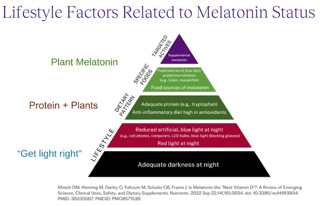
- Adequate darkness at night
- Sunlight exposure to stimulate mitochondrial melatonin
- No blue light at night only red, orange, and low wattage incandescent lights.
- Adequate protein intake from foods high in tryptophan, anti-inflammatory diet that is also high in anti-oxidants.
- Other specific food sources of melatonin and foods sources that of lutein (broccoli, spinach, lettuce, mustard greens, egg yolks) and zeaxanthin (saffron, kale, spinach, kiwi fruit, broccoli, lettuce, oranges, peas) both which protect eyes from blue light.
- Lastly supplementation if necessary with low dose plant based melatonin.
About 70 million people in the USA have ongoing sleep problems. Continued sleep deprivation often leads to exhaustion, general weakness, inability to focus, depression and many other unwanted effects like making it harder to exercise. Pharmaceuticals can make things worse by creating dependencies, or by compromising our mental, emotional and physical stability.
Some supplements to consider after testing and talking with your doctor include Vitamins D, C, B12. Deficiencies in these can impair sleep quality. Certain minerals support sleep as well including magnesium, potassium, and calcium.
Magnesium
Magnesium has a lot of jobs beyond helping our muscles relax so we can sleep. It is believed by most doctors the general population is lacking in magnesium due to deficiencies in the soil and most “dead” processed foods that lack nutrients in general. Many people are told to supplement and maybe that is necessary. I buy local organic food from farmers who nurture their soil —does that supply me adequate magnesium? I hope. Magnesium ions are at the center of the chlorophyll molecules making it abundant in leafy greens, green vegetables, nuts and seeds —and dark chocolate too.
If you are low in magnesium symptoms show up as loss of appetite, fatigue, nausea, anxiety, headaches, insomnia, high blood pressure, constipation, and the most common symptom, muscle cramps.
There are many types of magnesium, identifying your deficiency symptom to the type of magnesium you need can be helpful (the full list of the different types and what they do is beyond what I want to talk about here but we can revisit it later by request). In regards to sleep, the most important forms of magnesium for calm, relaxation, and sleep is magnesium sulfate and magnesium chloride; these forms are absorbed through the skin very well. Epsom salts are the primary source for these forms. I use them two different ways; epsom salt soaks in the bathtub —and I use a hefty dose —half a standard bag which is about 3# of epsom salts per bath. I also use a spray on magnesium oil derived from epsom salts which is very handy for travel or spraying on a specific area of my body that is painful or crampy. I like Ancient Minerals brand — it is very cost effective. About 6 sprays is a dose.
Magnesium glycinate is also calming and gut-friendly. This form is bound to glycine, an amino acid that promotes relaxation. It’s easy on your stomach and ideal if you’re dealing with anxiety driven poor sleep, muscle tightness, or stress.
If you decide to supplement, be careful some forms of magnesium such as magnesium chloride have a laxative effect. And side note since I mentioned Vitamin B6 in regards to melatonin conversion — B6 also increases magnesium uptake by our cells.
L-Theanine
L-theanine can be helpful in improving sleep quality but data is weak. L-theanine is in green and black tea, however shaded green teas such as matcha and gyokuro contain the most. L-theanine itself does NOT contain caffeine.
Studies suggest it may reduce the time it takes to fall asleep, decrease nighttime awakenings, and promote more restful, less anxious sleep. It increases alpha brain wave activity, which is associated with a relaxed, calm mental state. The state of meditation 🙂 It seems most helpful with people who have anxiety related sleep difficulties.
Two cups of tea provide approximately 50 mg which is enough to measurably increase alpha brain wave activity. By bedtime that will be cleared. Decaf green tea? hmmm that’s processed. If you want to try L-theanine to improve sleep quality supplementation is probably your best route —it is a reasonable, low-risk option for mild sleep difficulties — especially if stress or a racing mind is the main issue. It’s unlikely to be a solution for serious insomnia on its own.
GABA and sleep
GABA (gamma amino-butyric acid) is a messenger — a neurotransmitter, known to protect brain health by reducing anxiety, providing an overall sense of calm, and helping one to sleep well. It is best known for stabilizing moods. Anxiety, tension, insomnia and epilepsy are related to low levels of GABA.
Glutamate is the opposite of GABA — it is neuro-excitatory activating the stress response. Glutamate uses the same receptors in our body as GABA. GABA and glutamate need a balance, out of balance GABA/glutamate shows up as anxiety, panic, depression, fatigue, migraines, and more.
Glutamate is in MSG (mono sodium glutamate). If you eat glutamate your body will uptake glutamate to your receptors reducing your ability to uptake GABA. Avoiding processed foods containing MSG is your first step to regulating your GABA. Magnesium increases GABA and inhibits glutamate, so it is important here as well.
The best way to increase GABA is through foods. Once a food with GABA is ingested, it is absorbed easily and binds to GABA receptors in the peripheral nervous system leading to activation of the parasympathetic nervous system.
Foods to increase GABA are fermented foods, tea (especially oolong and green teas), noni (cactus fruit), the herb valerian, and chlorella, an algae.
The scent of lavender calms your nervous system by helping GABA attach to your nervous system receptors, which also means less glutamate will be able to attach. Lavender is a good oil to keep bedside.
Consider herbal sleep aids such as chamomile, passionfruit, valerian, and skullcap, you can take these as teas or tinctures. Also consider trying CBD and/or THC products and foods. I know many people these have worked well for. Chamomile tea at night is a nice sleep supporting habit. Chamomile is packed with anti-oxidants that are “anti-aging” offering a side benefit.
Sleep Meds need to be avoided —their side effects are nasty and they are hard to get off of. And meds such as Gabapentin which is often used for pain but also for sleep support, while side effects are not as bad as sleep meds they are still very hard to wean off of.
I am finishing this talk with essential oils to aid in sleeping —but first:
Troubleshooting sleep issues:
There can be many root causes for poor sleep: Dysfunctional sleep does not have one mechanism, such as reduced melatonin. Some root causes of sleep disturbance include:
- Underlying inflammation-related diseases, such as metabolic syndrome, sleep apnea, and any type of joint or muscle pain
- Hormonal fluxes related to estrogen, cortisol, and insulin
- Environmental toxins such as heavy metals. These can be tested for.
- Poor sleep hygiene, such as room temperature, adequate darkness, noise, and comfort of bed and pillows
- Unhealthy lifestyle practices such as stimulants, eating or being on devices too close to bedtime, and stress
- Inadequate dietary intake of macronutrients, especially tryptophan-containing protein sources and micronutrients such as magnesium, vitamin D, and calcium
If you fall asleep for a couple hours and then wake up:
Could be from a blood sugar issue —is your blood sugar dropping while you sleep? That will trigger your body to release cortisol which will wake you up to find food. If you struggle with this long term it would be worth your while to wear a CGM (continuous glucose monitor) for a month to see if you blood sugar drops while sleep. Before you go that route you could try these suggestions I mentioned earlier
- Eat a protein- and fat-rich snack before bed to keep your blood sugar steady. Try something like Greek yogurt with berries or sourdough toast with nut butter. Also make sure your last meal of the day has adequate protein to sustain your blood sugar overnight.
However if your blood sugar continues to crash at night long term, tell your doctor. It could be more than just meal timing such as insulin sensitivity or something else metabolic.
Also, check your cortisol. It could be a cortisol dis-regulation — cortisol is high in the morning to wake us up and drops throughout the day while melatonin does the opposite. If your body is dis-regulated with its cortisol/melatonin schedule you will struggle with sleep. Cortisol can be measured through saliva tests — usually one takes several saliva samples throughout different times of day.
Waking up to go to the bathroom then having a hard time falling asleep:
First of all —don’t turn on any lights. Make sure your path to the bathroom is clear before you go to bed. If feel its best to get up and go if you need to go to the bathroom. You’ll sleep better with an empty bladder —some people try to ignore the need, but this will keep waking you up. Don’t stop and check on anything on your way back to bed. Try to keep it short and sweet.
See the other tips below where I talk about being woken up in the middle of the night and give tips to get back to sleep.
If you felt like you slept good but awake tired:
Check your metabolic health with a basal thermometer in the morning. Body temperature and pulse rates are indicators of metabolic health. Low body temperature and pulse are indicative of being in “survival mode” which will impair sleep. This frequently occurs if you’re following restrictive diets like keto, fasting, or restrictive eating. A thriving metabolism is characterized by higher body temperatures, efficient energy production, better digestion, sleep, and energy levels. Ideal body temperatures are in the high 97s/low 98sF upon waking, and should slowly rise after meals until reaching 98.6F mid-day.
Also sleep apnea could be a cause of not feeling rested even if you think you slept well.
If you are startled within the first few minutes of falling asleep and struggle to get back to sleep:
Falling asleep requires your brain to progressively suppress alertness signals. In those first few minutes, that process is fragile and barely underway. A startle essentially resets the whole wind-down process, and your brain has to start over — which takes time.
The startle triggers your sympathetic nervous system, releasing adrenaline and cortisol into your bloodstream. Your heart rate spikes, your breathing quickens, and your brain becomes acutely alert. This is the opposite of the physiological state needed to fall back asleep.
The startle often coincides with or triggers a hypnic jerk — that involuntary muscle twitch many people experience at sleep onset. The leading theory is that as your brain transitions into sleep and your muscles relax, the brain misinterprets this as falling and fires a corrective jolt. Either way, it snaps you back to full wakefulness.
And the cortisol lingers, even after the immediate startle fades, the cortisol and adrenaline stay elevated in your bloodstream for 20–30 minutes or more. This keeps your arousal threshold high, making it genuinely difficult to drift off until the hormones clear —and sometimes even longer.
Once awake anxiety sets in and many people get frustrated or anxious (“I need to sleep”), which further activates the stress response and creates a feedback loop that prolongs wakefulness even more.
The irony is the harder you try to force sleep after a startle, the more aroused your brain becomes. The best approach is to stay calm, breathe slowly through your nose, and let the stress hormones naturally dissipate.
Other tips to get back to sleep include:
Calm the nervous system first
- Box breathing works well — inhale for 4 counts, hold for 4, exhale for 4, hold for 4. It directly activates the parasympathetic (rest) nervous system and counters the adrenaline spike.
- Try sweeping breath meditation or progressive relaxation meditation they refocus your brain away from alertness and mimics the physical relaxation of sleep onset.
Don’t fight the wakefulness, avoid the urge to check your phone —the light might further disrupt you.
These mental techniques could be helpful:
- Cognitive shuffling — a newer technique where you imagine a random, unconnected series of images (a shoe, a cloud, a ladder…). It mimics how the mind naturally drifts at sleep onset and signals to the brain that it’s safe to sleep. This is currently one of the most popular recommendations for helping get back to sleep. There are many different ways to do it, you can have a theme or pick a word and make random words from each letter in the word. Just don’t engage the prefrontal cortex with it –keep it random.
- Avoid problem-solving or replaying what startled you — that recruits the prefrontal cortex and is essentially telling your brain to stay on.
Remind yourself; one disrupted night won’t harm you —this alone can reduce the anxiety spiral. The fear of lost sleep is often more disruptive than the lost sleep itself.
If you are stuck sleeping in a room somewhere and you can’t control the temperature.
Usually in this case the room is too hot. I have purchased fans and left them at the place when I left.
You could also try wetting your hair before bed to help cool you off. A spray bottle with cool water and few drops of lavender spritzed around yourself as you crawl into bed could be helpful too. Lavender is cooling. You could also try my cooling spray, it will make your skin feel cooler. Menthol in peppermint and eucalyptol in eucalyptus essential oils activate cold-sensing nerves in the skin. Floral and citrus essential oils also offer cooling effects. I put these oils in a base of aloe vera and rose hydrosol.
Top factors affecting sleep —
- Sleeping with your partner …
- Too much blue light at nigh and not enough sunlight during the day
- Electronics, movies, and screens at night
- Not being able to sleep within your own natural circadian rhythm
Essential oils for sleep
Essential oils are communicators! Their job is to get out of the plant and into the air to communicate.
Studies have demonstrated aromas have a unique impact on sleep due to their close relationship to the brain. They enhance delta waves which promote more restful, deep sleep, and improve sleep stability (meaning you stay asleep).
Perl, O., Arzi, A., Sela, L., Secundo, L., Holtzman, Y., Samnon, P., Oksenberg, A., Sobel, N., & Hairston, I.S. (2016). Odors enhance slow-wave activity in non-rapid eye movement sleep. Journal of neurophysiology, 115(5), 2294–2302. https://doi.org/10.1152/jn.01001.2015
A group of essential oils, high in monoterpene esters can be of tremendous help without side effects, without creating dependency or causing drowsiness. Essential oils facilitate falling and staying asleep on multiple levels —they help your muscles release tension, calm an overactive mind, activate your parasympathetic nervous system gently easing our bodies to let go of tension and clear worries and anxiety. They lower cortisol and increase the feel good hormones serotonin and dopamine.
They ease melancholy, and inspire a more relaxed, positive mindset. Lavender (Lavandula angustifolia), for example, was found to perform as well as a popular anxiety drug (lorazepam) in a double-blind, randomized study.
Since the oils are very gentle they can be used generously on neck, shoulders, chest, solar plexus, can be diffused in your room or sprayed on your bed. Even one drop under your pillow or on top of your pillow can you help catch some Zzzzzzz better. Some people also have success with ingesting them.
The most important factor is that you like the aroma and the method of application. Play around with some aromas and how you want to use them —do you like to diffuse? Do you like the simplicity of one drop on your pillow? Or do you love to put a few drops in an oil such as jojoba and massage it into your chest, neck and arms in the evening? Other ways to consider using is a roll on blend, you can roll on your wrist, neckline, and behind hears prior to bedtime. You can also use essential oils in a warm epsom salt bath in the evening.
Essential oils for sleep with the most research:
- Lavender ahhhh sweet lavender, one of the most reliable oils for supporting the transition into sleep. High in the monoterpene esters of linalool and linalyl acetate, it helps GABA reach GABA receptors relaxing the stress response and making us feel good. The scent of lavender alone reduces pulse, blood pressure, and pain. Inhalation of lavender alone is capable of reducing sympathetic nervous activity and quieting mental looping. Lavender doesn’t force sleep, instead it creates the internal conditions that allow sleep to arrive. Use lavender when your mind will not stop talking or sleep feels light and easily disrupted.
- Roman Chamomile has a soft but powerful effect on the nervous system. It is the relaxer. It is high in calming esters taking the edge off internal irritability that can quietly block sleep. Chamomile preparations have been used for centuries across European and Middle Eastern traditions to soothe both gut and nerves. Reach for chamomile when sleep difficulty has an emotional component, you feel hypersensitive, or restless and irritable. I like to put one drop on my fingertips and massage it into my scalp, along with its many other benefits it softens hair too.
- Roman chamomile softens hair and helps to restore the natural oils that are stripped off by commercial shampoos. It conditions and detangles hair and protects it against UV radiation and pollution (and you as well) due to its high vitamin and anti-oxidant content. It can also protect against dandruff because it is a strong antiseptic and anti-inflammatory oil. It strengthens your hair follicles from within reducing hair loss while promoting hair growth and improving the elasticity of your hair. And chamomile brightens hair and improves your own natural highlights.
- Cedar (Cedars atlantica or Juniper virginiana) is a slow, steady, grounding presence for nighttime. It has a sesquiterpene rich profile that quiets the mind. It is useful for times when “my body is ready for sleep but my mind is not”. Across many traditional systems cedar has been associated with calm, stability, and sacred spaces.
- Sweet Marjoram (Oraganum marjorana) is a powerful muscle relaxer and can help you sleep if you have pain or tightness. It helps your body unwind physically and neurologically. This can be diffused or massaged in for direct pain support. Reach for sweet marjoram when your body feels tight, braced, or physically unable to release into sleep.
- Patchouli (Pogostemum patchouli) with its rich sesquiterpene content helps slow mental racing patterns. It also grounding, brings you back to the mattress like gravity to your system. It is useful when your body has difficulty settling down.
- Ylang ylang (Cananga odorata) reduces blood pressure and sympathetic activity while improving parasympathetic tone. It can be useful when the barrier to sleep is cardiovascular or stress driven activation such as tightness or worry in the heart area, or when you feel keyed up despite being fatigued.
- Vetiver (Chrysopogon zizanioides) is deep root medicine. When you feel too accelerated for sleep, vetiver can slow the whole system down. It has cooling and calming properties —one of the most grounding oils. It is especially helpful for helping one stay asleep after falling asleep.
When stress is high lean more toward these essential oils:
- Sweet orange (Citrus sinensis), Mandarin, Neroli, Petitgrain —all in the orange family, they relieve stress by decreasing cortisol in saliva samples.
- Rose (Rosa damascena) decreases sympathetic activity and adrenaline levels. It reduces anxiety and softens your heart.
- Bergamot (Citrus bergamia) contains multiple components that soothe your nerves and ease worries.
- Black Spruce (Picea mariana) rich in monoterpenes that support respiratory and adrenal recovery. Black spruce helps one exhale. Use black spruce with then body feels overstimulated. Sleep is starting to happen but your system has not fully downshifted.
Essential oils can increase serotonin and dopamine while inhibiting cortisol
- Lemon (Citrus limon) ingested lowers the neurotransmitters adrenaline and noradrenaline (aka epinephrine and norepinephrine) while it increases dopamine and serotonin. Lemon essential oil can induce significant changes in neuronal circuits involved in anxiety and pain.
- Clary sage (Salvia sclerea) increases dopamine giving you a nice dose of feel good hormones. It softens internal tension patterns. Its ester rich profile supports emotional easing or softening. Use it when you feel you need to let down your guard. Clary sage softens internal tensions and opens the mind to the dreamworld during sleep.
If you want help customizing a sleep blend for yourself you can reach out to me.
Here are some of my favorite sleep blends — the drop numbers represent the amount of drops for a diffuser, you could also put them in a little bottle to put one drop on your pillow, or mix them in 1-2 ounces of carrier oil depending the amount of scent you want:
Calm Mind blend
Frankincense – 8 drops
Sweet Orange – 9 drops
Patchouli – 4 drops
Courageous Cedar
Cedar – 10 drops
Wild Orange – 10 drops
Relax
Spruce – 6 drops
nutmeg – 4 drops
sweet orange – 10 drops
Relax and Calm blend
Sweet marjoram – 10 drops
Roman chamomile – 6 drops
Jatamansi or Valerian – 1-2 drops (you could substitute patchouli)
Clear the air with Tulsi
Tulsi – 3 drops
Lavender – 12 drops
Lime – 7 drops
Relaxing Body, Mind, and Spirit
6 drops vetiver
6 drops roman chamomile
6 drops bergamot
Calm and Ground
3 drops vetiver
5 drops clary sage
12 drops lavender
These research extracts represent just some of the wealth of research currently being conducted on the effects of essential oils on the nervous, endocrine systems, and sleep.
References:
Sense of Smell Institute, Ltd. (1992). Living well with your sense of smell. New York, NY.
Saeki Y and Mayumi S., Physiological effects of inhaling fragrances. The International Journal of Aromatherapy (2001), 11.3, 118-125.
Haze S, Sakai K, and Gozu Y. Effects of fragrance inhalation on sympathetic activity in normal adults. Jpn. J. Pharmacol.(2002) 90, 247-253.
Hongratanaworakit T and Buchbauer, G. Autonomic and emotional responses after transdermal absorption of sweet orange oil in humans: placebo controlled trial. International Journal of Essential Oil Therapeutics (2007) 1,29-34.
Harris, B. Research reports: Harmonizing Ylang ylang. The International Journal of Aromatherapy (2005) 15, 54-57.
Harris, B. Research reports: Menopausal treatment. The International Journal of Aromatherapy (2006) 16.2, 101-104.
Chen, SW.,Min L, Li WJ, Kong WX, Li JF, and Zhang YJ. The effects of angelica essential oil in three murine tests of anxiety. Pharmcol Biochem Behav. 2004 Oct;79(2):377-82.
Ceccarelli I, Lariviere WR, Fiorenzani P, Aloisi AM. Effects of long-term exposure of lemon essential oil odor on behavioral, hormonal and neuronal parameters in male and female rates. Brain Res. 2004 Mar 19;1001(1-2):78-86.
Park MK, Lee ES. The effect of aroma inhalation method on stress responses of nursing students. Dept. of Nursing, Nambu University, Gwangsan-gu, Gwangju city, Korea.
Harris, B. Aromatherapy and Palliative Care: excerpts from the Essential Oil Research Database. The International Journal of Clinical Aromatherapy (2004) Vol 1, Issue 2, 51-53.
Hansen, TM. Hansen B. and Ringdal GI. Does aromatherapy massage reduce job-related stress? Results from a randomized, controlled trial. The International Journal of Aromatherapy (2006) 16,89-94.
Davidson, J.L. Aromatherapy and Work-Related Stress. The International Journal of Aromatherapy (2002) 12:3, 145-151.
Hongratanaworakit T and Buchbauer, G. Autonomic and emotional responses after transdermal absorption of sweet orange oil in humans: placebo controlled trial. International Journal of Essential Oil Therapeutics (2007) 1,29-34.